Last updated on August 30th, 2026 at 06:11 pm
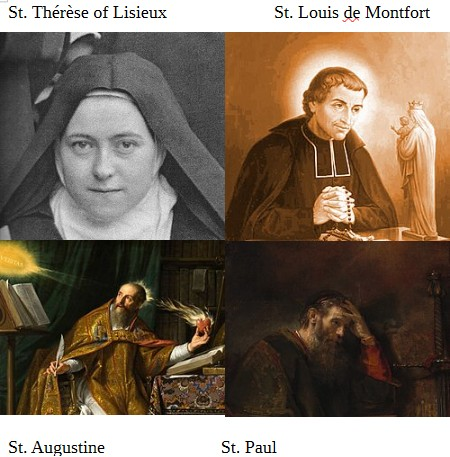
This Tremendous Lover by Eugene Boylan captures the transcendentals – beauty, truth and goodness – of the Catholic religion. It presents an inspiring incentive and pathway to help one fully live out the promises of Christ. The feature image of the saints was chosen because their teachings and philosophies can be seen as an influence in Boylan’s work. For myself, the book has ignited a fire in me and brought me tears of joy. The book, published in 1946, has sold over a million copies. It has been translated into numerous languages including Chinese.
Eugene Boylan, born in 1904, was lecturer and research scientist in physics. He became a Cistercian monk and priest. Here is a focus of this book from Fr. John Hardon’s Catholic Lifetime Reading Plan:
All are called to perfection. Other things being equal – and they often are far from equal – the way to perfection is far from being impossible in the world. And at the moment, the crying need is for holiness among the laity. To be quite clear as to our terms of reference, let us say that we regard the married state as the normal one for the laity, and that it is the married man and woman whom we have particularly in mind throughout this book; we are not thinking in terms of lay recluses or hermits.
The book also shows on Fr John McCloskey’s A Catholic Lifetime Reading Plan.
The book starts off at eternity. For God always existed. It tells how God, who needed nothing, being infinitely happy and completely sufficient for Himself, in His infinite goodness created the world to share His joy and happiness. The angels were created, then the world and completing in humans. In God’s infinite generosity and love he created man and woman in His image and likeness. First the fallen angels sinned and through the sin of pride and disobedience were condemned to hell. This involved the loss of God and the power to love God or anything else. They, in their fury, later tempted Adam and Eve to also sin. Our first parents – also through the sin of pride and disobedience – rejected God’s plan for the happiness of the whole human race. We are now born into a fallen state having lost the gifts of immortality and a privilege Boylan refers to as integrity. The latter was a gift by which their reason had complete control over their animal nature. Thus began the unending rebellion of the flesh against the spirit that is called concupiscence. God made the world for His own glory. Being infinite Truth , God cannot deny his own supremacy. In planning all creation for His own glory, He decided to glorify Himself by making his creatures happy. When our first parents rejected that plan, God arranged to find His glory in His mercy.
So begins the first chapter of Eugene Boylan’s “This Tremendous Lover”. Each chapter is full of insight and beauty in his description of God, his plan and His relationship with us. The human race was in a state of misery. We could never atone for our sin against the supreme majesty of God. We continued to sin due to our concupiscence. But God in His infinite Goodness took Mercy on us. He would send us a Savior. The second Person of the Trinity, God Himself. Jesus would be the only appropriate Sacrifice to satisfy Divine Justice. Boylan notes that even when God pardons our sins that He does not take away all the consequences of those sins. However in God’s infinite mercy these very difficulties can be the very instruments of a still higher happiness. It provides opportunities to exercise virtue and God is a source for more ample strength for its exercise.
As the Angelus prayer quotes – “Behold the handmaid of the Lord. Be it done unto me according to thy word….And the Word was made flesh and dwelt amongst us.” Through Mary’s humility and obedience God’s plan unfolded with the birth of the Savior. Boylan goes on to show how Jesus’ life and various parts of it showed His humility and obedience. It culminated in the intense agony of His Passion. This unfolding plan helps us understand the enormity of sin, shows us His immense love and desire for our happiness and ought to win our confidence and love. ‘This Tremendous Lover’ wept for Jerusalem on Palm Sunday, experienced the bitter treatment of his love in rejection and derision, and suffered and shed every drop of blood for us on Good Friday. Boylan states that the whole of God’s plan for our sanctification consists in making us living partners in the life and death of Christ. Christ’s partnership on earth was completed two thousand years ago, while our part has still to be performed. But we do not act alone. The Church, the sacraments, God’s presence, Mary and the Saints intercession help us. Just a personal observation it stuck me that it appears the Eucharistic Prayer in the Mass appears to follow the communion of Saints. There are prayers that invoke the saints in heaven, remember the souls in Purgatory and pray for the Church on earth. They all assist us in our achievement of a partnership with Christ.
Next Boylan looks at the question of How did Christ save us, redeem us from our sins, make us holy in the sight of God and restore us to friendship? The answer is by making us part of Himself. He then asks how are we to save ourselves. To which he answers – by making ourselves part of Christ. This unity is the central part of Boylan’s whole book. This unity is spoken of by Jesus at the Last Supper.
“I will not leave you orphans, I will come to you … you shall know that I am in My Father, and you in Me, and I in you.”
Later , in His concluding prayer to the Father Jesus reveals the unity of what St Augustine calls “the whole Christ”:
“For them do I sanctify Myself, that they may be sanctified in truth. And not only for them only do I pray but for them also who through their word shall believe in me; that they all may be one as Thou, Father, in Me and I in Thee, that they may also be one in Us.”
“And the glory which thou hat given to Me, I have given to the; that they may be one, as We also are one; I in them, and Thou in Me! That they may be made perfect in one”
Boylan goes on to quote one of my favorite passages and my screen background image.
“…And I have made known Thy name to them; and will make it known; that the love wherewith Thou hast loved Me may be in them, and I in them.”
Boylan reinforces this notion of being one with Christ by referring to the conversion of St Paul when Jesus spoke to Saul and said:
“Saul, Saul, why persecutest thou Me” Saul replied “Who art thou Lord?” and He said “I am Jesus Whom you persecute.”
This shows the identification of Jesus with the redeemed. St Paul in his writings compares the union of Christ and His Church to that of a man and wife: “And they shall be two in one flesh.” But St Paul continuously writes about Christ and his Church as the union of a body with its living members, Christ is the Head, we are the members. “Now you are the body of Christ”. This has been referred to as the Mystical Body of Christ. Mystical not because it is not real – “one might say figuratively speaking, that it is the only reality in the world, but to distinguish it from all other corporate unities.”
“This Mystical Body of Christ is a supernatural organism, of which the faithful are members, united to Christ in somewhat the same way as the members and head of the human body are united together, yet without any loss of individual personality or responsibility…In this organism the Holy Ghost acts as the soul and Christ as the Head; but because of the vital and mystical union between Christ and each member, the whole organism can be called Christ…..Our salvation depends upon our membership of this Body; and the fullness of our membership depends upon doing the Will of God.” Boylan goes on to note that the Mystical Body of Christ transcends space and time.
Boylan speaks of us being in partnership with Christ. He compares Christ’s and our life as part of an incomplete motion picture where an actor has to later be filmed and added to the original filming. Our part in Christ’s life and death is being played now. Our actions will either harmonize with Christ’s or are useless or even harmful. However Boylan says that Christ knows us perfectly with all our mistakes, weaknesses, neglects and miseries. Jesus comes with the Power of God to heal all our ills. He is perfectly prepared to repair our life completely if we do not prevent Him. “In one Holy Communion we can receive the perfect complement of all our wasted past and damaged self… There is no moment in our life in which we cannot turn to Him and find in Him not only the perfect complement of our self, no matter how much we have lost, but also the perfect restoration of our past. For He is God, and He is our Savior.”
The book speaks of faith and hope. Boylan states “…the baptized, in as much as he is a member of Christ, communicates in the expiation of His Passion as if he himself had undergone it. The member of Christ, then, can call the infinite merits of Christ his own, and offer them to God for all his needs; and that special title to them acquired in Baptism endures as long as he is not in mortal sin. What limit then is there to his hope?” The third theological virtue is that of charity or love. He quotes St Paul’s well known writing if you have all gifts or do good works but have not love it is all for naught. God wants our love. The things we do is not as important as our love. “But the love of our hearts is something unique, something no one else can give Him….In any case it is not for His own sake that He wants our love, but because He desires to make us happy with Him for ever, and He can only do that if we are in love with Him.” He concludes that chapter on the teaching that we must love our neighbor as an expression of our love of Christ. Whatever you did for one of these least brothers of mine, you did for me.
The rest of the book goes through the various ways in which we can seek, find and unite with Christ. There are sixteen chapters on these ways. Each filled with inspiration and insight. They include ways such as humility, obedience, prayer, reading, Sacraments, sacrifice, our neighbor, marriage and Mary.
Some closing quotes from the last chapter. “What then have we to do. We must realize that God is our Tremendous Lover, that He is our All and that He has done all our works for us. We must believe in God, and not in ourselves; we must hope in God and not in ourselves; we must love God and not ourselves…..For God made all things for His glory, and Christ is the glory of his substance. God willed to glorify Himself by His mercy, and ours is the misery that calls down His mercy. Our holiness in spite of our misery is the glory of His mercy, for Christ is our All.”
I truly enjoyed the book and feel that it has drawn me closer to God. It opened my eyes to see things from a fresh perspective. I reread parts of the book for this review and still received inspiring insight on the second reading. What more could you ask for from a book? The language is more recent than some of the older saints writings and flows well. I put this book as among the top most inspirational religious books I have read. Some of my favorites include Story of a Soul by St. Therese of Lisieux, Diary of Saint Maria Faustina Kowalska – Divine Mercy in My Soul, He and I by Gabrielle Bossis and He Leadeth Me by Fr. Walter Ciszek. The book This Tremendous Lover has been added to the list.