Last updated on November 27th, 2025 at 01:19 pm
Are you in awe when you watch a movie or read a book about a true story of someone that went above and beyond normal human undertakings to do something that made the world a better place. I have been when learning about Mahatma Gandhi, Mother Teresa, or Oskar Schindler. I was even impressed with the personal transformation of Jan Schlichtmann, the lawyer which the movie a Civil Action was based. The list can go on. You feel a tug to do something of such virtue but are at a loss as to what that could even be. That is the draw of the transcendental of goodness. We are all drawn to the transcendentals of beauty, truth and goodness as they direct us to the ultimate beauty, truth and goodness that is God.
However there is something that each and everyone of us can do that goes beyond the ordinary and makes the world a better place. We can actively participate in the Mass. To actively participate in the Mass is the greatest accomplishment that one can hope to do in their day. Pope Leo has said “…the celebration of Mass saves us today! It saves the world today! It is the most important event in the life of the Christian and in the life of the Church, because it is the encounter in which God gives himself to us for love, again and again.”
The purpose of the Mass is to give glory to God and the sanctification of the world. We say it during the Mass:
As the priest washes his hands, He says “Wash me oh Lord from my iniquity (sins) and cleanse me of my sin” (Psalm 51:2). Then in Persona Christi, he begs for the prayers of the people, “Pray bretheren, that my sacrifice and yours may be acceptable to God the almighty Father.” We respond, “May the Lord accept the sacrifice at your hands for the praise and glory of His name, for our good and the good of all His holy church.” This two-fold response shows the purpose of the Eucharistic sacrifice-to give glory to God and for sanctification and transformation of his people, the church.
As Jesus carried the cross, Simon of Cyrene was pressed into service to help Jesus carry the cross. Though not a volunteer in this act he did as was his commanded lot. Imagine his gratitude on his death to know that he was able to assist Jesus in some small way in his sufferings. We too through the Mass can be of service to offer our lives in union with Jesus’ sacrifice for the good of His holy church.
To quote the Catechism – “In the Eucharist the sacrifice of Christ becomes also the sacrifice of the members of his Body. The lives of the faithful, their praise, sufferings, prayer, and work, are united with those of Christ and with his total offering, and so acquire a new value. Christ’s sacrifice present on the altar makes it possible for all generations of Christians to be united with his offering.”
I do not think I am alone in realizing that a large portion of our lives are filled with routine, seemingly trivial tasks. There may be boredom or even suffering associated with the tasks or work we do. From the Book of Ecclesiastes:
Vanity of vanities, says Qoheleth, vanity of vanities! All things are vanity!
What profit have we from all the toil which we toil at under the sun?
One generation departs and another generation comes, but the world forever stays.
…
All things are wearisome, too wearisome for words.
The eye is not satisfied by seeing
nor has the ear enough of hearing.
What has been, that will be; what has been done, that will be done. Nothing is new under the sun!
Even the thing of which we say, “See, this is new!” has already existed in the ages that preceded us.
There is no remembrance of past generations; nor will future generations be remembered by those who come after them.
But we have the ability to unite our lives with Jesus Christ and offer all with His sacrifice for the salvation of His holy church. We like Simon can assist in the salvation of the world. The Mass is where this offering is most effective. It unites our daily sacrifices with Christ’s re-presented sacrifice to God the Father. How valuable our every moment of life becomes! Oh Sacrament Most Holy, Oh Sacrament Divine. All Praise and all Thanksgiving be every moment Thine.
The offering is fruitful even if you do not receive the Eucharist at the Mass. However if you do receive the Eucharist how wonderful that is! I believe the devout and worthy reception of the Eucharist does enable us to better communion with Jesus throughout our day. By maintaining an awareness of God we are better able to offer our moments to God as they are occcuring. This can only make them better offerings when remembered at Mass.
In the words of St Augustine
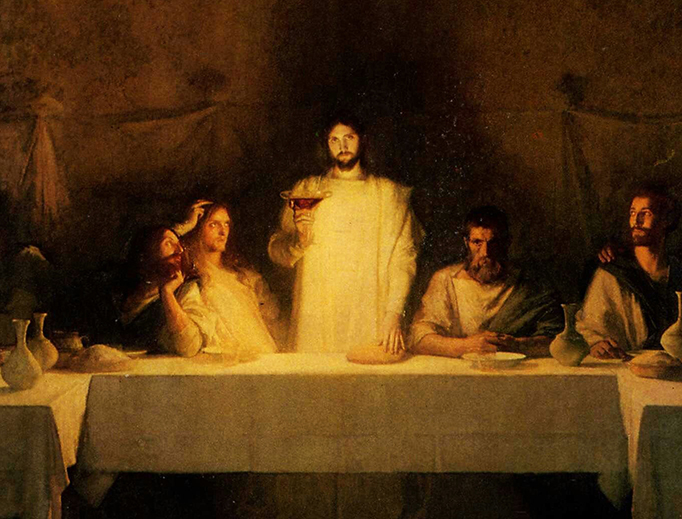
“The bread you see on the altar, sanctified by the word of God, is the body of Christ. The chalice, or rather, what the chalice contains, sanctified by the word of God, is the blood of Christ. In these signs, Christ the Lord willed to entrust to us his body and the blood which he shed for the forgiveness of our sins. If you have received them properly, you yourselves are what you have received.” Consequently, “not only have we become Christians, we have become Christ himself.” This becoming like Jesus in turn sanctifies the world.
There are an estimated 1.4 billion Catholics in the world. In the United States, according to a Pew research poll 20% of U.S. adults describe themselves as Catholics. That would be roughly 53 million Catholic adults nationwide. According to their poll published in June 2025, 28% of US Catholics say they attend Mass weekly. That poll indicates that only 13% of US Catholics go to Mass weekly and go to confession yearly and pray daily, doing all three.
Imagine the change the world would see if we increased our religious practices. The ones not going on Sunday start to go. The ones going weekly make an effort to attend weekday mass when possible. The 87% not doing all three practices of weekly Mass, confession and prayer increase at least one practice. We consume material on the Mass and increase our reverance and gratitude of the Mass. All Catholics can increase their religious practices in either quantity or quality. The season of Advent is approaching. What better way to celebrate this precious time than an increase of religious fervor in our lives.
Terrence Sweeney had a great article and title in his 2022 America Magazine article Vatican II didn’t fail. It’s just getting started. The theme of the Council was to spiritually renew the Church. The term Aggiornamento an Italian word meaning “bringing up to date” was used. It was to adapt its practices to contemporary needs without changing its core doctrine. The documents that came out of Vatican II are rich in guidance and a vision for the Church.
Lumen gentium promotes a move away from a solely clergy-centric “hierarchical model” to emphasize the concept of the Church as the “People of God”. This included a stronger focus on the universal call to holiness and the active role and apostolate of the laity in the Church’s mission.
Sacrosanctum concilium called for “full, conscious, and active participation by all the people” in the Mass. Such participation by the Christian people as “a chosen race, a royal priesthood, a holy nation, a redeemed people, is their right and duty by reason of their baptism.
Gaudium et spes articulated the Church’s solidarity with humanity and its mission to engage with modern social and economic problems such as war and poverty, rather than remaining separate from the secular world.
Nostra aetate changed the Church’s relationship with non-Christian religions, particularly Judaism, by explicitly rejecting the ancient accusation that Jews were collectively responsible for Christ’s death and condemning anti-Semitism. It acknowledged that truth and grace can be found in other faiths, opening the door to mutual respect and dialogue.
Dei verbum emphasized the importance of Sacred Scripture in the life of the Church and theology, encouraging personal study of the Bible by all Catholics.
Dignitatis humanae affirmed the principle of religious liberty as a fundamental human right rooted in the dignity of the human person, a departure from previous positions that sometimes allowed for coercion in matters of faith.
Unitatis redintegratio promoted ecumenism, fostered dialogue, respect, and collaboration with other Christian denominations, referring to their members as “separated brethren” rather than heretics.
These documents from Vatican II promote an environment conducive to the laity being more involved in the Mass and drawing closer to Christ. They promote a religion that is not directed by coercion but rather the love and mercy of God. They promote that all are called to holiness.
If you devoutly attend Mass and worthily receive the Holy Eucharist will they write books about you or make a movie? Probably not here on earth. But maybe it will be so in heaven. Either way we would be more open and attentive to what God is calling us to do. As Mary said – “Behold, I am the handmaid of the Lord. May it be done to me according to your word.”